
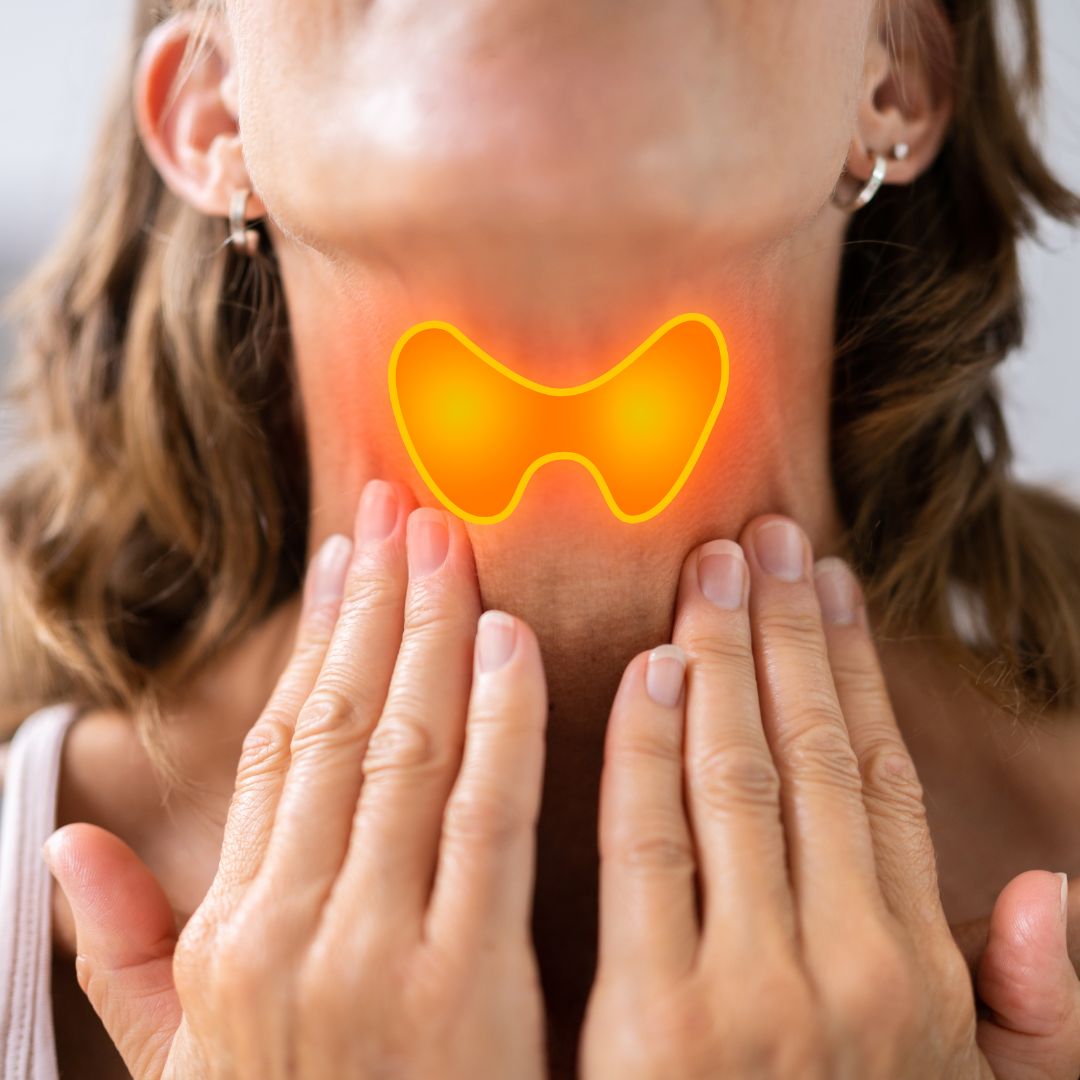
Thyroid and PCOS/PMOS: Understanding the Overlap
If you have PCOS/PMOS and constantly feel exhausted, cold, foggy headed or as though your body is working against you, it can be difficult to know what is actually driving your symptoms.
Many symptoms associated with thyroid dysfunction actually overlap with symptoms commonly seen in PCOS/PMOS. Fatigue, thinning hair, low mood, weight changes, irregular periods and difficulties with energy or concentration can occur in both conditions, which is one reason so many women feel confused or dismissed when trying to get answers.
Research over the last few years has also shown that thyroid conditions, particularly hypothyroidism and autoimmune thyroid conditions such as Hashimoto’s thyroiditis, appear to be more common in women with PCOS/PMOS compared with women without the condition.
This does not mean that everyone with PCOS/PMOS has a thyroid condition. However, it does highlight how interconnected our hormones, metabolism, immune system and nervous system really are.
Why can thyroid issues and PCOS/PMOS overlap?
Research has consistently shown that autoimmune thyroid conditions, particularly Hashimoto’s thyroiditis, are more common in women with PCOS/PMOS than in women without the condition. While we do not yet fully understand the relationship, several underlying mechanisms are thought to contribute.
One of the most important appears to be chronic low-grade inflammation. Women with PCOS/PMOS often have higher levels of inflammatory markers, alongside increased oxidative stress and altered immune signalling. Over time, this inflammatory environment may affect immune tolerance, meaning the immune system becomes more likely to mistakenly target healthy tissue, including the thyroid gland.
Insulin resistance may also play a role. Persistently elevated insulin levels can influence inflammatory pathways and immune activity, whilst excess adipose (fat) tissue itself can produce pro-inflammatory signalling molecules which further stimulate immune dysregulation.
Hormonal imbalances may contribute too. Oestrogen and progesterone both influence immune function, and disrupted ovulation in PCOS/PMOS can alter the balance of these hormones over time. Some researchers believe this may partly affect autoimmune susceptibility in genetically predisposed women.
Emerging evidence is also exploring the gut-thyroid connection. Increased intestinal permeability, changes in the gut microbiome and altered short-chain fatty acid production have all been observed in both PCOS/PMOS and autoimmune thyroid disease. Because around 70% of the immune system is associated with the gut, researchers are increasingly interested in how gut health may influence immune regulation and thyroid autoimmunity.
At the same time, blood sugar dysregulation, chronic stress, under-fuelling, poor sleep and restrictive dieting may all place additional strain on the body, potentially affecting hormonal signalling more broadly.
This is often why women feel that their symptoms cannot simply be explained by one hormone in isolation.
Fatigue, hair loss and irregular periods
One of the most common things I hear from women with PCOS/PMOS is: “I just don’t feel like myself anymore.”
Fatigue is incredibly common, but it is rarely caused by one thing alone.
Poor blood sugar balance, stress, inadequate sleep, low iron levels, inflammation, gut issues and thyroid dysfunction may all contribute to low energy and brain fog. In practice, it is often a combination of factors rather than a single root cause.
Hair thinning can also be complex. Higher androgen levels associated with PCOS/PMOS may contribute to scalp hair thinning in some women, whilst thyroid dysfunction may affect the hair growth cycle itself.
Similarly, both thyroid dysfunction and PCOS/PMOS may contribute to irregular or heavy menstrual cycles.
This is why taking a whole-body approach can be so important. Looking at hormones in isolation often misses the bigger picture.
The role of stress and inflammation
Many women with PCOS/PMOS have spent years battling symptoms, trying restrictive diets, over-exercising or feeling frustrated that their body does not seem to respond in the way they expect.
Over time, chronic stress can have a significant impact on sleep, blood sugar regulation, inflammation and overall wellbeing.
This is one reason I often focus on foundations such as blood sugar balance, adequate nourishment, sleep, stress management and gut health support, rather than chasing quick fixes or extreme protocols.
Nutrition and lifestyle factors that may support thyroid health
Nutrition cannot cure thyroid conditions, and it is important that persistent symptoms are properly investigated by your GP or endocrinologist. However, lifestyle factors may play an important supportive role in overall hormonal health and wellbeing.
Some of the most helpful foundations often include:
Certain nutrients including selenium, iodine, zinc, iron and vitamin D are also important for thyroid health. However, supplementation should always be individualised, particularly with iodine, as taking high doses is not always appropriate.
Most importantly, it is essential that women feel listened to.
Too many women with PCOS/PMOS normalise exhaustion, hair loss, anxiety or feeling “burnt out” because they have been told that these symptoms are simply part of having hormonal issues.
You deserve to understand what your body is trying to tell you.
If you are experiencing ongoing fatigue, changes in your cycle, hair thinning, digestive symptoms or persistent low mood, it may be worth having a conversation with your healthcare provider about whether further thyroid investigation is appropriate.
You can also read more about the relationship between hormones, inflammation and gut health in my recent blogs on the Gut–Hormone Axis and the Food–Mood Connection.
And don’t forget, you’re welcome to book a free call with us here at any time.





For any conditions other than PCOS, please feel free to be in touch with our sister clinic Alex Allan Nutrion
PCOS Clinics is part of the Green Leaf Company (London) Ltd, a limited company registered in England and Wales. Registered number: 10990293
Disclaimer: ‘Please note that nutritional therapy is not medical advice - this should always be sought from your doctor or other medical provider. We aim to work alongside your doctor or GP to provide nutritional and lifestyle advice to support any underlying imbalances.'
Website by Phuse Media - Web Design Southend
